
CMS Finalizes the CY2026 ESRD Payment Rule — a 2.2% Bump and Renewed Scrutiny of Water Systems
Medicare reimburses outpatient dialysis through the End-Stage Renal Disease Prospective Payment System, a bundled per-treatment rate that CMS updates annually. The exact percentage update for any given calendar year is set in that year's final rule, which is published in the Federal Register and posted by CMS — readers should confirm the current figure against those primary sources, since the number is finalized after a public comment period and can shift from the proposed rule.
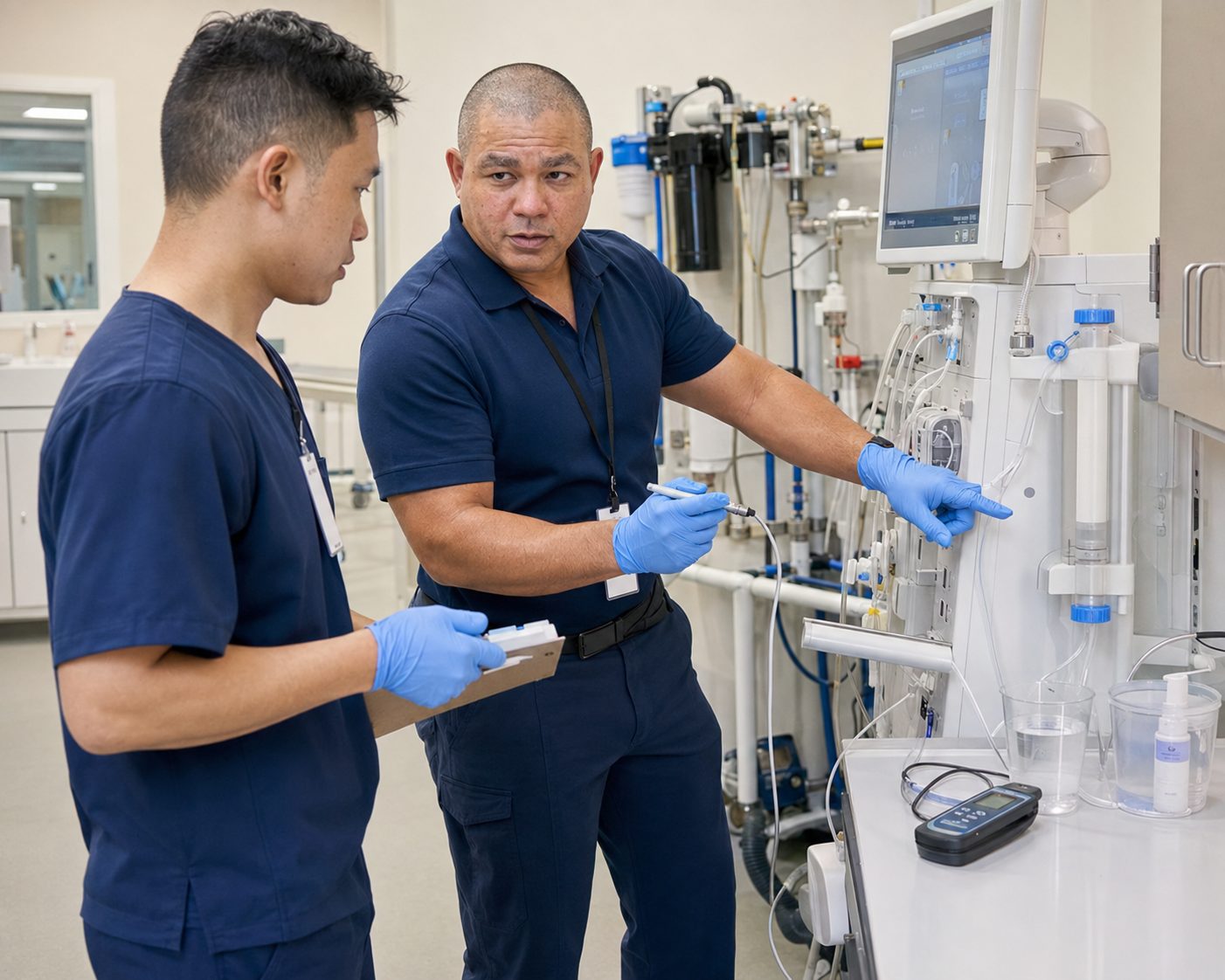
Payment is only half of the compliance equation. To bill Medicare, facilities must meet the ESRD Conditions for Coverage codified at 42 CFR Part 494, which set enforceable standards for patient safety, infection control, and — critically for equipment teams — water and dialysate quality. Surveyors scrutinize the water treatment system closely, because contaminated dialysate poses a direct patient-safety risk during hemodialysis.
That is where reimbursement and maintenance meet: a stable payment rate does little good if a water-quality deficiency threatens certification. Consistent monitoring, documented preventive maintenance on RO systems, and survey-ready records are the investments that protect both patients and a facility's ability to bill.
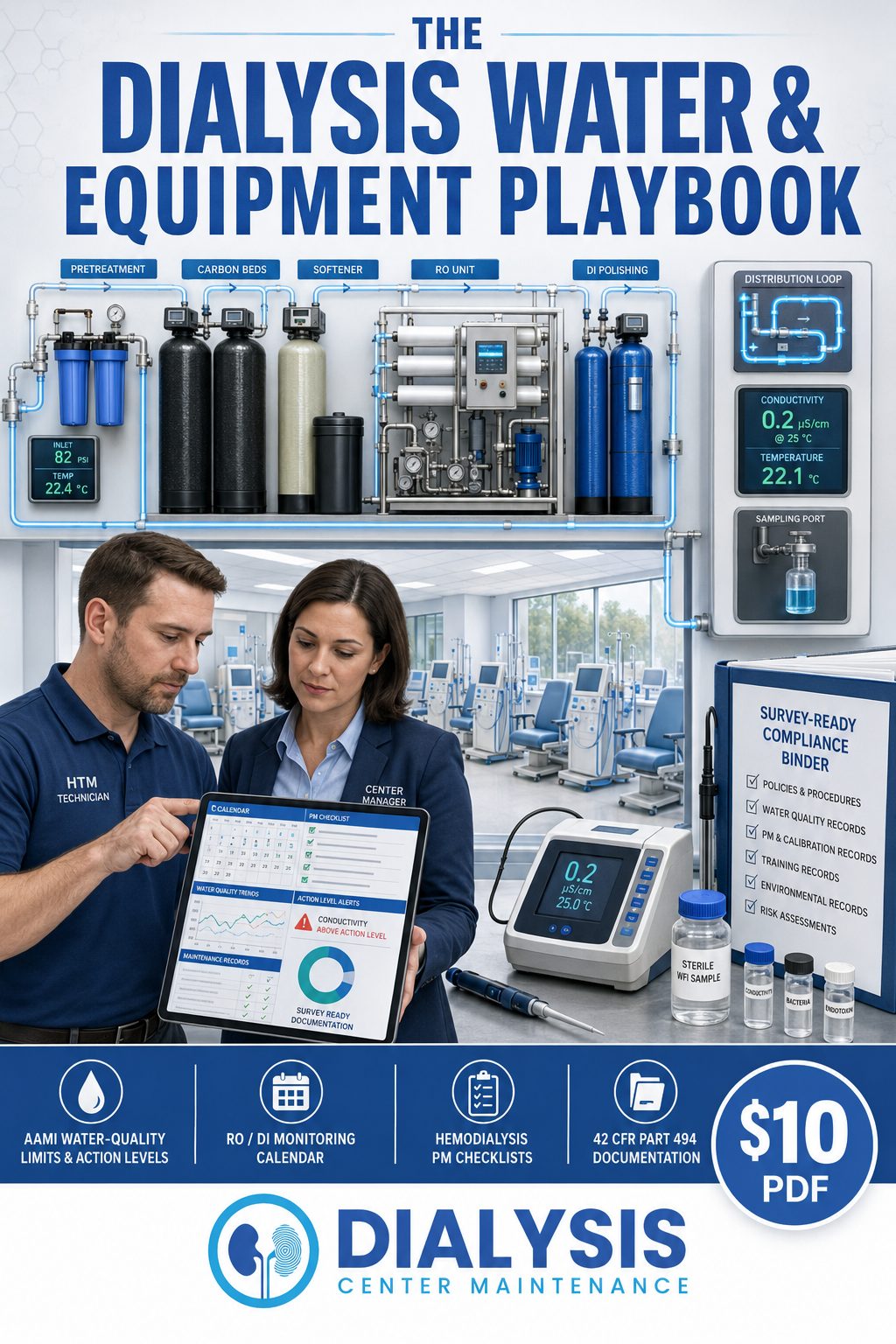
Water is the unglamorous heart of a dialysis unit, and the standard that governs it was refreshed in 2024. ANSI/AAMI/ISO 23500-2:2024 sets the requirements for the water-treatment equipment that keeps dialysis water consistently safe, protecting patients from chemical and microbial contaminants that ride in on the municipal supply. The updated edition folds the U.S. Tryptic Soy Agar method for detecting bacteria into the international standard, adds guidance on how water and dialysate samples should be stored before testing, and expands its coverage of backflow prevention and electrical safety for home hemodialysis systems. For a maintenance program that is a practical checklist: validated reverse-osmosis systems, documented disinfection cycles, and sampling that actually tracks the microbial and endotoxin limits the standard sets. We build our preventive-maintenance schedules to those specifications so a facility can walk into a survey with the records already in hand.
Sources: CMS — ESRD Payment System; 42 CFR Part 494 — ESRD Conditions for Coverage; AAMI — Updated Dialysis Standards (ANSI/AAMI/ISO 23500)